- Art & Design
- Computing
- Design & Technology
- Early Years Foundation Stage (EYFS)
- English
- French
- Geography
- History
- Mathematics
- Music
- Physical Education
- PSHE
- Religious Education
- Science
Giving every child the best start
At Beverley Minster Primary School, we want every child to have the best possible start to their school journey. Our Early Years curriculum is designed to help children become confident, curious and independent learners while developing the knowledge, skills and understanding they need for the next stage of their education.
Our Reception children follow the Early Years Foundation Stage (EYFS) statutory framework. This is the national framework that all schools and early years providers in England must follow. It sets out the standards for children’s learning, development, health and safety from birth to the end of the Reception year.
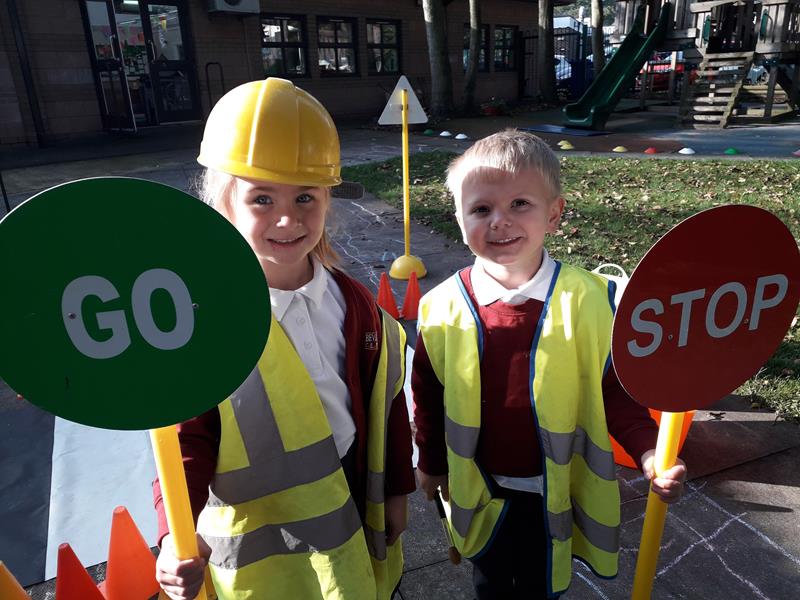
What does the EYFS mean for my child?
The Early Years curriculum is about much more than learning to read, write and count. It supports the whole child.
Children learn through a combination of:
- purposeful play and exploration
- conversations and interactions with adults and other children
- stories, songs, rhymes and books
- practical, hands-on experiences
- carefully planned activities
- opportunities to practise and apply what they have learned
- developing independence and taking responsibility
- exploring their own interests and ideas.
Play is a particularly important part of learning in the Early Years. Children are given opportunities to explore, investigate, make choices, solve problems and develop their imagination, while adults skilfully support and extend their learning.
The seven areas of learning
The EYFS curriculum is organised into seven areas of learning and development. These are closely connected, and children often develop skills in several areas at the same time.
Communication and Language
Children develop their listening, attention and understanding and learn to express themselves clearly. We provide rich opportunities for children to talk, listen, ask questions, learn new vocabulary and develop their confidence in communicating with others.
Personal, Social and Emotional Development
Children learn about themselves and others. They develop confidence, resilience and independence, learn how to form positive relationships and begin to understand and manage their feelings and behaviour.
Physical Development
Children develop their gross and fine motor skills through activities such as climbing, balancing, running, dancing, construction, drawing, cutting and handwriting. We also help children understand the importance of healthy lifestyles and looking after themselves.
Literacy
Children develop a love of books, stories, rhymes and reading. They learn about sounds and letters through our systematic phonics teaching and begin to apply their knowledge when reading and writing. We encourage children to talk about stories, develop their vocabulary and become confident writers.
Mathematics
Children develop a strong understanding of number and mathematical concepts through practical experiences, discussion and play. They explore counting, quantities, patterns, shape, space, measures and relationships and learn to use mathematical language to explain their thinking.
Understanding the World
Children develop an understanding of the world around them. They explore people, communities, nature, the environment, technology and the past and present. We encourage children to ask questions, investigate, make observations and develop an understanding of their place in the world.
Expressive Arts and Design
Children have opportunities to express themselves creatively through art, music, dance, role play, design and imaginative play. They explore different materials, techniques and forms of expression and develop their creativity and confidence.
The first three areas — Communication and Language, Personal, Social and Emotional Development, and Physical Development — are known as the prime areas. They are particularly important in supporting children’s development and underpin learning across the other four areas.
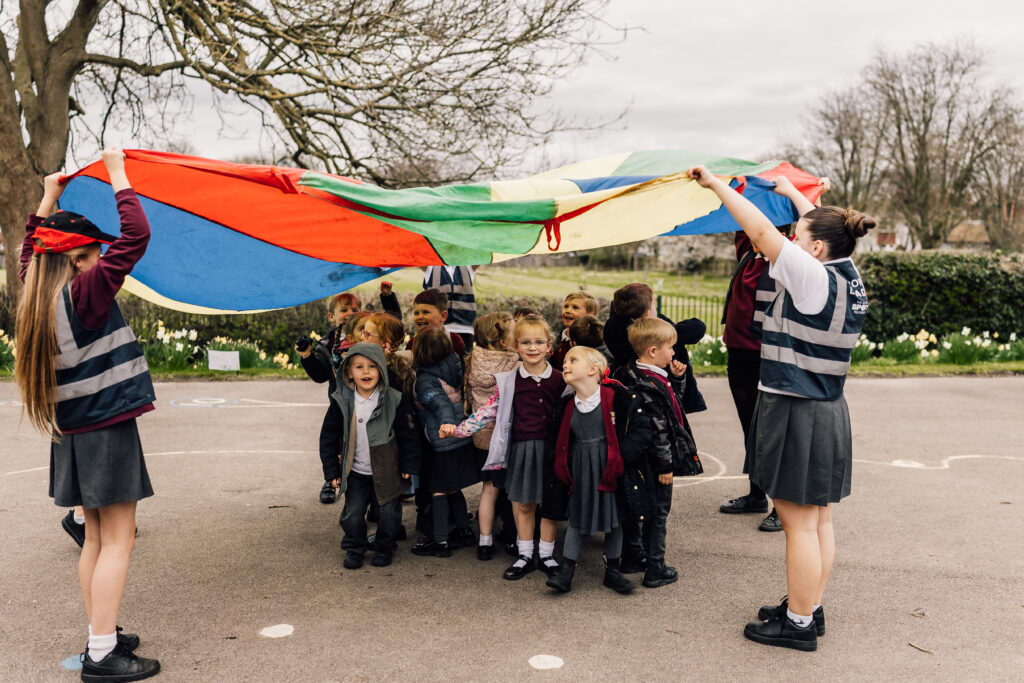
Learning through play
At Beverley Minster Primary School, we recognise that young children learn best when they are actively involved in their learning.
A child building a tower, for example, may be developing their physical coordination, exploring mathematical ideas about size and shape, solving problems, communicating with friends and developing their imagination — all at the same time.
Our role is to provide an environment where children feel safe, valued and excited to learn. Adults observe what children know and can do, respond to their interests and identify opportunities to introduce new vocabulary, knowledge and skills.
This means that learning is carefully planned, but it can also be responsive to the children in front of us.
How do we know how well children are progressing?
Assessment in the Early Years is an ongoing process. Teachers and practitioners observe children as they play, learn and interact, and use what they see to understand each child’s development and plan what they need to learn next.
Children are not tested throughout the year. Instead, assessment is largely based on what teachers know about children through their everyday interactions, observations and work.
At the end of Reception, teachers make an assessment against the Early Learning Goals. These describe the knowledge, skills and understanding children are expected to have developed by the end of the Reception year.
The Early Learning Goals are used for assessment — they are not a curriculum or a checklist that children have to work through.
How can parents help at home?
Parents and families have an enormously important role in children’s early learning. Everyday experiences provide wonderful opportunities for learning.
You can support your child by:
- sharing books and stories every day
- talking together and introducing new words
- singing songs and nursery rhymes
- counting as part of everyday activities
- encouraging your child to get dressed and manage their belongings independently
- cooking and baking together
- going on walks and talking about what you see
- encouraging drawing, painting, cutting and making
- playing games together
- encouraging your child to ask questions and explain their ideas
- giving them time to play, explore and solve problems for themselves.
Most importantly, talk, play, read and have fun together. These simple experiences make a huge difference to children’s language, confidence, relationships and readiness to learn.
Preparing children for the future
Our Early Years curriculum is designed to give children a strong foundation for their future learning. We want our children to leave Reception as enthusiastic and confident learners who can communicate effectively, build positive relationships, look after themselves and others, and approach new experiences with curiosity and resilience.
Every child is unique, and children develop at different rates. At Beverley Minster Primary School, we celebrate individual progress and work closely with families to ensure that every child is supported to achieve their potential.
We believe that a happy, secure and curious child is ready to learn — and that the Early Years should be the beginning of a lifelong love of learning.
Parent Resources
Phase 2 Sounds – https://vimeo.com/641445921/9382cf6db0
Phase 3 Sounds – https://vimeo.com/642342878/59d233684c